

- About
- Programs
- View all programs
- Swiss Professional Degree (ES)


- Bachelor of Arts in International Hospitality Management

- Master of Arts in International Hospitality Business Management
- Master of Arts in International Hospitality Business Management: Luxury Brand Management

- Master of Science in International Hospitality Management

- Master of Arts in Executive Hospitality Management (online)

- Postgraduate Diploma in International Hotel, Resort, and Spa Management

- Campus life
- Career Services
- Admissions
- News & Events
- Alumni








How to Build a Career in Luxury Hospitality
Learn how to build a career in luxury hospitality with skills, training, and opportunities to thrive in this prestigious global industry.


Key Takeaways
- Luxury hospitality is defined by exclusivity, meticulous detail, and modern values such as sustainability, wellness, privacy, and technology integration.
- Building a career in luxury hospitality requires strong education, practical experience, networking, and developing expertise in a chosen niche like spa management, fine dining, or luxury events.
- Career progression typically begins with entry-level service roles, advances through mid-level management, and can lead to executive positions or entrepreneurial ventures.
Luxury in hospitality is most clearly experienced in the details, where the ordinary ends and the exceptional begins. The principle of caring for guests and ensuring comfort remains constant across the industry, yet luxury elevates this through precision, personalization, consistency, and the highest standards of service.
The difference is also seen in the preparation required of those who work in it. Luxury hospitality calls for a refined understanding of design, service culture, operational excellence, and guest expectations, demanding more than general hospitality knowledge. Building expertise in this area is not simply about being part of the industry but about knowing how to build a career in luxury hospitality, where specialized skills and insight distinguish true professionals.
Understand the World of Luxury Hospitality
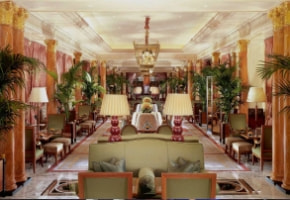
Luxury hospitality is defined by exclusivity. Such properties distinguish themselves through a level of detail that extends across every aspect of the guest experience, creating standards that justify their higher price points.
The global luxury hospitality market is a major economic force. In 2024, luxury hotels generated around €142 billion ($154.3 billion). This figure is projected to rise to €153 billion ($166.4 billion) in 2025 and surpass €200 billion ($218 billion) by 2029, reflecting steady global expansion. These numbers point to the resilience of the luxury segment and the sustained appetite for experiences defined by refinement and exclusivity, even as the broader hospitality industry continues to evolve.
However, luxury today extends beyond lavish interiors or expensive amenities. Sustainability, wellness programs, privacy, and thoughtful use of technology have become integral to what travelers value most. Properties now position themselves as leaders in these areas, recognizing that modern guests associate true luxury with wellbeing and experiences designed around personal choice.
Key sectors within luxury hospitality
The luxury hospitality ecosystem spans several interconnected sectors, each presenting distinct career paths and professional opportunities:


Start Your Journey in the World of Hospitality
Turn your passion into a rewarding international career
- Luxury hotels and resorts: High-end urban properties, exclusive resorts, boutique hotels, palace hotels, and global brands offering refined accommodations, premium amenities, and attentive service.
- Fine dining and gastronomy: Michelin-starred venues, restaurants led by renowned chefs, private dining clubs, and gourmet experiences centered on culinary excellence.
- Luxury travel and concierge: Personalized travel services including private jet and yacht charters, chauffeured transport, and destination management tailored to individual or corporate clients.
- Wellness and spas: Exclusive spas, retreats, and health-focused resorts that emphasize advanced treatments, restorative therapies, and holistic wellbeing.
- Events and experiences: Private weddings, elite galas, incentive programs, and high-level business gatherings characterized by privacy, customization, and specialty services.
- Private rentals and villas: Exclusive residences such as villas, chalets, penthouses, and serviced apartments offering privacy, dedicated staff, and personalized hospitality.
- Luxury retail and entertainment: Designer boutiques, curated shopping experiences, and VIP access to cultural events, art shows, and performances often integrated with luxury hotel offerings.
Essential Skills for a Career in Luxury Hospitality
Building a career in luxury hospitality requires a refined mix of technical knowledge and interpersonal strengths that support service at the highest level. Key hospitality skills include:
- Communication excellence: Clear articulation, active listening, and the ability to adapt communication styles to diverse guest backgrounds. Multilingual abilities are especially valuable in international luxury settings.
- Cultural sensitivity and emotional intelligence: Respectful navigation of guest expectations through awareness of cultural nuances in service, dining, and social interaction.
- Problem-solving and adaptability: Rapid, creative responses to challenges and coordination across departments to meet guest expectations without delay.
- Leadership and collaboration: Guidance of teams and smooth cooperation between departments to maintain consistently high standards of service.
- Technical expertise: Skills in revenue management, event planning, food and beverage operations, and digital tools that enable personalized guest experiences.
How to Build a Career in Luxury Hospitality
Building a successful career in luxury hospitality depends on well-chosen education programs, hands-on industry experience, and purposeful networking that opens access to exclusive opportunities within this competitive field.

Get the right education and training
One of the defining traits of luxury hospitality is the caliber of its staff. Guests return to luxury hotels, resorts, and restaurants because the people working there demonstrate knowledge and the ability to elevate every interaction.
That level of professionalism rarely comes by chance. It is developed through formal education in hospitality management, which provides both the theoretical understanding and the practical application required for careers at the highest level.
Internationally recognized programs remain the strongest choice for aspiring professionals. They offer credibility, global exposure, and a clear pathway into the upper tiers of the industry. Among these, Swiss Hotel Management School (SHMS) ranks among the world's top three hospitality schools.
Many students are drawn to SHMS for its global recognition and the depth of its teaching, which combines academic rigor with extensive practical training. In fact, Synne Gjermundsen Mørk, a student in our BA in International Hospitality Management program, said she initially chose SHMS precisely for its global recognition. Then reflecting on her experience and the school's reputation, she added:
The school offers a thorough learning style that is recognized throughout the world because of its emphasis on practical training in addition to a theoretical program.
This balance is a hallmark of SHMS. The curricula for our programs are specifically designed to combine business fundamentals with hospitality expertise, giving students a comprehensive skill set while exposing them to the realities of guest service, property operations, and cultural interaction.

Additionally, advanced programs like the MA in International Hospitality Business Management prepare graduates for executive positions by focusing on leadership and global business perspectives. Students can specialize in areas such as Hotel Management, Event Management, or Luxury Brand Management.
That last specialization has become particularly important, as it equips students with an understanding of the luxury sector, covering consumer behavior, the challenges facing retail environments, and the increasing role of digital services in shaping guest expectations.
This impact is clear in the reflections of students such as Leonie Demgenski, who chose the Luxury Brand Management specialization. She spoke about the intensity and rewards of the degree, noting: "SHMS was definitely better than expected, but tougher, too. With so much to do and learn, students had to engage with their studies right away. The program is excellent, and we learn so much in a short amount of time."
Leonie later explained that in only six months at SHMS, she gained more than she had during several years of previous study elsewhere. Her experience shows how SHMS challenges students to advance quickly, combining depth of knowledge with the ability to apply it directly in luxury contexts.
Gain practical experience
Although classroom knowledge builds the foundation for success in luxury hospitality, true mastery develops in real-world environments. Stepping into luxury properties allows students to understand how high standards play out in practice and what it takes to meet them consistently.
Internships at reputable luxury brands offer hands-on learning as well as direct exposure to industry leaders who often become future employers. Entry-level roles in prestigious properties provide further immersion in service excellence and operational discipline.
Training across different departments accelerates this learning process. By working in areas such as front office, food and beverage, or event coordination, students develop versatility and gain a comprehensive view of how luxury operations function as an integrated whole.

It is during such internships that, for many, the difference between conventional and luxury service becomes most apparent.
For SHMS student Synne, her first placement at The Retreat, a five-star property at Iceland's Blue Lagoon, showed how luxury transforms the role of staff. Receptionists managed only a few check-ins each day, a model that allowed for highly personalized service. "This model enables us to act almost like personal butlers, attentively following our guests throughout their stay and anticipating their needs," she explained.
At SHMS, access to such opportunities is strengthened by both the school's industry partnerships and its setting. As student Carla Vallet explains, "Choosing SHMS in Montreux also means benefiting from its strategic location in the heart of Europe, close to numerous international hospitality organizations and luxury establishments." Proximity to these hubs allows students to build networks and apply their skills in some of the world's most respected hotels and resorts.
The International Recruitment Forum (IRF) further expands this access, bringing leading employers such as Marriott, Four Seasons, and Ritz-Carlton directly to campus. Many students secure internships and first placements through this event, gaining entry into top-tier positions that might otherwise be out of reach.
One example of the reach IRF has is Liam Wynn Williams, who received an internship at the Ritz-Carlton Hong Kong after an interview at the event during his studies at SHMS. "I was fortunate to have been offered a position at the IRF itself without any further interviews needed," he recalled. Experiences like his show how the IRF serves as a direct gateway into the luxury hospitality world.
Build a professional network
Connections often shape career advancement in luxury hospitality as much as skills or experience. Industry relationships open the door to exclusive job opportunities, fast-track promotions, and provide mentorship from seasoned professionals who know the demands of the sector.
Networking happens in many ways. Formal occasions such as industry conferences, alumni gatherings, and recruitment events give students direct access to decision-makers. Digital platforms like LinkedIn extend this reach by allowing students and graduates to build and maintain professional relationships with leaders around the world.


At SHMS, students benefit from a particularly strong network. The school's alumni community spans more than 25,000 professionals across 35 chapters worldwide, offering a resource for career advice, introductions, and mentorship long after graduation.
The IRF further strengthens this advantage, bringing leading employers to campus each year and giving students the chance to secure internships or job offers directly from luxury brands.
Advancing Your Career in Luxury Hospitality
Progress in luxury hospitality depends on continuous skill development and staying aligned with global industry trends that influence future opportunities.
Specializing in a niche
Targeting specific areas such as spa management, fine dining operations, or luxury events can accelerate career growth by building recognized expertise in high-value service areas. Specialists often command higher salaries and enjoy greater mobility between properties, seeking advanced knowledge.

At SHMS, students are encouraged to identify and refine their niche. Programs such as the Postgraduate Diploma in International Hotel, Resort, and Spa Management equip graduates with professional skills, valuable connections, and exposure to current industry practices.
Employers in luxury hospitality value professionals who bring depth in a specific service area. While luxury hospitality is already a specialized segment of the industry, those who build expertise in narrower fields within it stand out even more.
The path to leadership roles
Reaching leadership roles requires strategic decision-making, financial insight, and advanced people management skills in addition to operational expertise. Leaders must understand revenue optimization, market positioning, and brand standards, all while guiding large, diverse teams.
This is why SHMS programs integrate business knowledge with hospitality training. Many students pursue studies here not only to manage properties but also to prepare for entrepreneurship or executive roles. The curriculum emphasizes business strategy, digital innovation, and global market analysis, helping students move beyond operational tasks into management and leadership.
The effectiveness of this training shows in graduate results: 97% of SHMS graduates receive job offers by graduation, and 89% advance to management positions or launch their own businesses within five years.
Global opportunities and trends
Modern careers in luxury hospitality are defined by international mobility. Professionals frequently work across several countries, gaining cultural insights and skills that global luxury brands value highly.
Current hospitality trends include the integration of sustainability, the use of technology for personalized service, and a stronger focus on experiential travel. Adapting to these developments ensures long-term relevance and creates opportunities for new career specializations.
SHMS prepares students for this reality through partnerships with leading brands and a network of alumni across the world. Students come from a wide range of cultural backgrounds and go on to intern or work globally, demonstrating how the reach of SHMS extends far beyond its campuses.
Job Roles and Career Paths in Luxury Hospitality

Career progression in luxury hospitality offers a variety of routes. Each stage requires new skills, broader responsibilities, and a stronger ability to deliver at the highest service level.
Some of the most common roles include:
- Entry-level positions: guest relations coordinator, junior event planner, restaurant server in fine dining establishments, and front desk associate at luxury properties.
- Mid-level management: assistant hotel manager, concierge supervisor, restaurant manager, and senior event coordinator.
- Senior management and executive roles: general manager, director of operations, regional manager, or specialized positions such as director of guest experience and head of luxury brand development.
Career growth usually begins with entry-level roles. At schools like SHMS, students gain this kind of experience while studying through internships and practical training. With time and exposure, professionals move into management roles, first at junior levels and later into broader leadership responsibilities. Those who pursue additional education or advanced degrees often accelerate their rise to senior positions.
Specialization can also create different career paths. Expertise in a specific area of luxury hospitality can lead to leadership roles built around that niche. Others leverage their training and experience to launch their own businesses, building luxury ventures that reflect their personal vision.
Make Your Mark in the World of Luxury Hospitality
To build a successful career in luxury hospitality, you need a balance of knowledge, practical experience, and access to opportunity. SHMS brings these elements together through programs that integrate academic study with hands-on training, supported by industry partnerships and a global alumni network that opens doors to top-tier placements and long-term career growth.
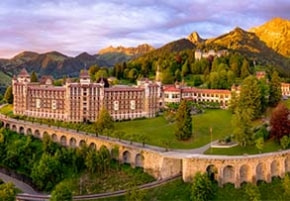
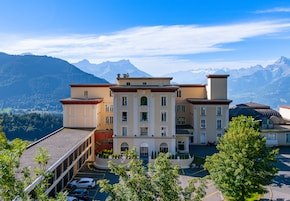
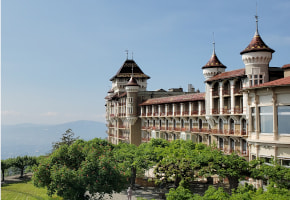
With campuses in the historic Caux Palace and the alpine town of Leysin, SHMS students develop their expertise in environments that embody both the heritage and the future of luxury hospitality.
Frequently Asked Questions
What are some future trends in luxury hospitality??
Key trends include sustainability integration, AI-powered personalization, wellness-focused experiences, and immersive technology enhancing guest engagement.
What is the highest job position in a luxury hotel?
For a single hotel property, the General Manager typically holds the highest operational role. However, in large, multi-property corporations or international brands, the top position would be the CEO or President of the hotel company.
Is it hard to get a job in luxury hospitality?
Competition is intense, but quality education, relevant internships, and strong interpersonal skills significantly improve employment prospects in this relationship-driven industry.
Take the leap — discover your future in hospitality with Swiss Hotel Management School.