

- About
- Programs
- View all programs
- Swiss Professional Degree (ES)


- Bachelor of Arts in International Hospitality Management

- Master of Arts in International Hospitality Business Management
- Master of Arts in International Hospitality Business Management: Luxury Brand Management

- Master of Science in International Hospitality Management

- Master of Arts in Executive Hospitality Management (online)

- Postgraduate Diploma in International Hotel, Resort, and Spa Management

- Campus life
- Career Services
- Admissions
- News & Events
- Alumni









What Is MICE? The 4 Pillars of the Event Industry
From the 4 pillars to 2026 trends, get a full breakdown of the MICE industry. Learn how it works, explore key destinations, and find career opportunities.


Key Takeaways
- MICE stands for Meetings, Incentives, Conferences, and Exhibitions as the four core segments of the global business events industry.
- The MICE industry generates significant economic value, with Switzerland among the world's leading MICE destinations, valued for its neutrality, safety, and world-class hospitality infrastructure.
- Careers in MICE require multi-disciplinary skills spanning event logistics, data analysis, sustainability, and cross-cultural communication.
Business travel was once treated as a logistical necessity. Flights were booked, hotel rooms reserved, meetings held, and the objective was simple: complete the task and return home. Efficiency mattered more than experience. The trip was a means to an end.
Today, that model no longer reflects reality. Events are no longer administrative line items. They are strategic platforms where decisions are shaped, networks are built, and reputations are reinforced. What was once considered operational coordination has evolved into a global industry built on "MICE".
What Is MICE?
MICE stands for Meetings, Incentives, Conferences, and Exhibitions. The acronym is used within the business events sector to distinguish organised corporate gatherings from leisure travel. The emphasis is not recreation. It is knowledge exchange, business development, performance recognition, and market positioning.
Although MICE sits within the broader category of business travel, it is fundamentally different from an individual flying to attend a client meeting. MICE events are structured group operations. They involve multiple stakeholders, negotiated venue contracts, coordinated programs, technical production, sponsorship alignment, and measurable outcomes.


This complexity requires specialised expertise in logistics, budgeting, stakeholder management, and event strategy. As a result, dedicated education in event management and logistics has become integral to leading hospitality and business programs.
The sector's scale reflects its strategic importance. The global MICE market was valued at approximately $870 billion in 2024 and is projected to reach $1,466 billion by 2030, growing at a compound annual growth rate of 9.2%. These figures indicate not only growth, but the economic weight of a sector that supports industries ranging from pharmaceuticals and finance to technology and luxury retail.
4 pillars of the MICE industry
Each component of MICE serves a distinct function within corporate strategy. While they share logistical foundations, their objectives and design requirements differ.
Start Your Journey in the World of Hospitality
Turn your passion into a rewarding international career


Meetings
Meetings are small- to medium-scale gatherings organised around a specific objective. These include board meetings, executive strategy sessions, departmental planning workshops, or client briefings. Participants are typically internal decision-makers or selected partners. Although meetings are the most common form of business event, they require a structured agenda, appropriate venue selection, and professional facilitation to deliver measurable outcomes.
Incentives
Incentive travel programs reward high-performing employees, distributors, or partners through curated travel experiences rather than direct financial bonuses. The purpose is behavioral reinforcement. Companies use incentives to strengthen loyalty, improve morale, and sustain performance culture.
An incentive program involves a multi-day experience in a premium destination with exclusive activities and branded programming. Successful incentive design requires understanding audience motivation, performance metrics, budget structure, and experiential impact. It combines data analysis with creative planning.
Conferences


Conferences, often referred to as conventions, bring together professionals within a defined industry or sector. Their purpose is education, networking, and thought leadership. These types of events include keynote sessions, panel discussions, breakout workshops, and exhibition areas.
Large-scale conferences attract thousands of participants and span several days. They require coordination between venues, sponsors, speakers, production teams, and destination management companies. Budget management, content programming, and technical logistics operate simultaneously at scale.
Exhibitions
Exhibitions, also known as trade shows or expos, are platforms where businesses present products or services to a targeted audience. Some are trade-only events, while others are open to public participation.
Exhibitions generate direct revenue opportunities for exhibitors and a significant economic impact for host destinations. They require structured floor planning, booth design coordination, sponsor integration, visitor flow management, and commercial alignment between buyers and suppliers.
How the MICE Industry Works
MICE operates as a coordinated ecosystem of specialized providers, each responsible for a defined part of the event structure. It is not delivered by a single specific organization.
At the centre are the venues. These include convention centres, luxury hotels, historic properties, or purpose-built event campuses. Venues provide physical infrastructure: meeting rooms, exhibition halls, accommodation, catering facilities, and technical capabilities. However, they do not manage the entire event independently.
Two specialist firms often play a coordinating role:
- Destination Management Companies (DMCs) manage the local execution of an event. They are experts in a specific destination and oversee ground transportation, off-site activities, supplier sourcing, cultural programming, and operational troubleshooting. For international events, DMCs bridge the gap between global organisers and local infrastructure.
- Professional Conference Organisers (PCOs) manage the overall lifecycle of conferences and congresses. Their responsibilities include program design, speaker coordination, delegate registration systems, sponsor integration, budgeting, compliance management, and post-event evaluation. In large-scale congresses, the PCO functions as the central project manager.
These core actors are supported by a network of secondary providers. Audio-visual and event technology firms handle staging, lighting, streaming, and hybrid event platforms. Transportation companies coordinate transfers and logistics. Catering specialists design large-scale service operations. Sustainability consultants ensure compliance with environmental standards. Digital developers manage registration platforms and data systems.
A MICE event succeeds only when these layers operate in coordination.
Key MICE Destinations Around the World
Destination selection for a MICE event is driven by four core criteria: air connectivity, infrastructure quality, safety, and the growing appeal of bleisure (business + leisure). The leading MICE destinations share strengths across all four.


Established powerhouses include:
- Switzerland: A premier MICE hub built on political neutrality, world-class hospitality standards, and a proven track record of hosting high-stakes international gatherings.
- Singapore: The leading MICE destination in Asia-Pacific, with purpose-built venues, strong government support for the industry, and a highly connected aviation hub.
- United Arab Emirates: Dubai and Abu Dhabi have invested heavily in exhibition and convention infrastructure, positioning the UAE as a gateway between East and West for large-scale events.
There are also many emerging secondary hubs that are attracting growing interest for their combination of value and distinct cultural appeal, such as Austin (USA), Porto (Portugal), Rabat (Morocco), and Bangkok (Thailand).
Key Trends Shaping MICE in 2026
The MICE industry is responding to broader changes in how people work, meet, and make decisions. Four trends are reshaping the sector:
- AI integration: Artificial intelligence is being used to personalise attendee itineraries, match delegates with relevant sessions and speakers, and analyse engagement data in real time. Event planners with data literacy now have a measurable competitive advantage.
- Sustainability and ESG accountability: Corporate clients increasingly require events to meet environmental, social, and governance standards. Carbon-neutral events, zero-waste catering, and mandatory emissions reporting are moving from optional to expected.
- Slow MICE and wellness design: A reaction to overprogrammed, back-to-back schedules has created demand for events that prioritise mental health, cultural immersion, and intentional downtime. Planners who can design for wellbeing, not just logistics, are in demand.
- Phygital events: The hybrid event model has matured beyond the simple webcam stream. Augmented reality and virtual reality tools now allow remote participants to engage with physical events in meaningful ways, expanding audience reach without requiring physical travel.
Careers and Opportunities in the MICE Sector
The MICE sector is one of the stronger growth areas within hospitality and business services. As organizations place greater strategic value on face-to-face engagement, demand for skilled event professionals continues to build. Key roles in this sector include:
- Event Planner: Manages the end-to-end delivery of meetings, conferences, or exhibitions
- Venue Manager: Oversees the operations of a hotel, convention centre, or dedicated event space
- DMC Specialist: Works within a Destination Management Company to coordinate local logistics for international clients.
- Sustainability Consultant: Advises event organisers on how to reduce environmental impact and meet ESG reporting requirements.
- Event Tech Strategist: Selects and manages the digital platforms, apps, and AV technology that support modern events
These roles demand a combination of competencies that are difficult to develop in isolation: event logistics, financial management, data analysis, cross-cultural communication, and sustainability thinking. The professionals who advance in MICE are those who can move between the strategic and the operational, who can design an event program in the morning and resolve a catering supplier issue in the afternoon.
The BA in International Hospitality Management at Swiss Hotel Management School is structured around how the industry actually operates. Across four academic semesters, students combine core hospitality foundations with contemporary management practice, followed by two 4–6-month worldwide internships. These internships are not observational. Students work inside active operations, build professional networks, and gain measurable experience in real event environments.
The Events Management specialization addresses the operational realities of the sector. Students study event design, logistics planning, sustainability integration, entrepreneurship, and hospitality economics. The focus is practical: budgeting, supplier coordination, program structuring, risk assessment, and post-event evaluation. The curriculum aligns directly with the competencies employers expect in MICE-related roles.
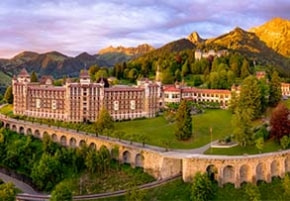
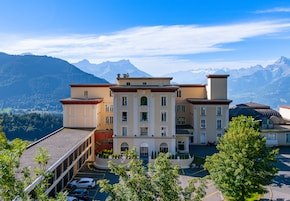
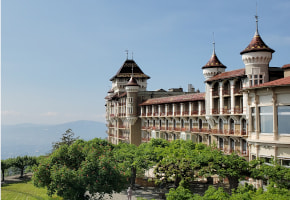
SHMS also offers a training environment that cannot be simulated. Students study and work in historic Swiss palace hotels, including the Caux Palace campus. Operating events in venues where service standards are exacting develops attention to detail, timing discipline, and execution under pressure. Graduates leave with documented, applied experience rather than theoretical exposure alone.
The International Recruitment Forum (IRF) strengthens this pathway. This structured recruitment platform connects students directly with global hotel groups, event agencies, and luxury brands. For those pursuing corporate event planning or large-scale business events, these employer connections often translate into immediate career entry.
If you are evaluating programs that prepare you for the MICE sector, examine how closely the academic structure aligns with operational reality. SHMS is designed with that alignment in mind.
Prepare for a World of Purposeful Events
MICE is about designing experiences that serve a clear business purpose, fostering the trust, knowledge, and collaboration that remote communication doesn't replicate. In 2026, the most valued MICE professionals are those who combine logistical precision, sustainability awareness, cultural intelligence, and the ability to read an audience's actual needs.
The MA in International Hospitality Business Management and the BA at SHMS are both strong starting points for a career at the intersection of hospitality and events. To run a successful event at the highest level, you need more than enthusiasm. You need structured education, hands-on practice, and the professional networks to open the right doors. That's what SHMS is built to provide.
Frequently Asked Questions
Who attends mice events?
MICE events are attended by business professionals, industry specialists, corporate employees, and decision-makers, from company executives at internal strategy meetings to thousands of delegates at international trade conferences.
What is an example of MICE tourism?
A pharmaceutical company flying 500 medical professionals to Geneva for a three-day research congress is a clear example of MICE tourism. It combines a business purpose with professional travel and accommodation in a host destination.
What are some ways to get into the MICE industry?
A degree in hospitality or event management is the most direct route, particularly programs with dedicated MICE coursework and practical internships. Relevant experience can also be built through entry-level roles in hotel events departments or with DMCs and PCOs.
How does the MICE industry help the tourism sector of a country?
MICE visitors typically spend significantly more per day than leisure tourists and stay longer, thus driving demand for hotels, restaurants, transport, and local services. Major MICE events also raise a destination's international profile and attract long-term business investment.
Are you wondering where to start your dream hospitality career? Look no further than a bachelor’s degree at Swiss Hotel Management School.