


- About
- Programs
- View all programs
- Swiss Professional Degree (ES)


- Bachelor of Arts in International Hospitality Management

- Master of Arts in International Hospitality Business Management

- Master of Arts in International Hospitality Business Management: Luxury Brand Management

- Master of Science in International Hospitality Management

- Master of Arts in Executive Hospitality Management (online)

- Postgraduate Diploma in International Hotel, Resort, and Spa Management

- Campus life
- Career Services
- Admissions
- News & Events
- Alumni











What is a Barista? Role, Skills, and Career Path
From espresso extraction to service, discover what a barista is and the professional skills needed for a successful career in the specialty coffee industry.

Key Takeaways
- A barista is a trained coffee specialist with expertise spanning extraction science, flavour profiling, and guest service.
- The role requires a precise set of technical and interpersonal skills, including espresso calibration, milk texturing, latte art, and the ability to manage high-volume service with consistency.
- Formal hospitality education, such as the programs offered at Swiss Hotel Management School, gives aspiring baristas a competitive foundation for advancing into leadership and beverage management roles.
Coffee is a big part of everyday life. It starts early mornings before work, carries long afternoons in offices and studios, fills quiet moments between tasks, and accompanies conversations with friends. A well-prepared cup can improve focus and sustain energy. A poorly made one can interrupt the flow of the day.
That difference is not accidental. It depends on the skill of the barista making it.
What Is a Barista?
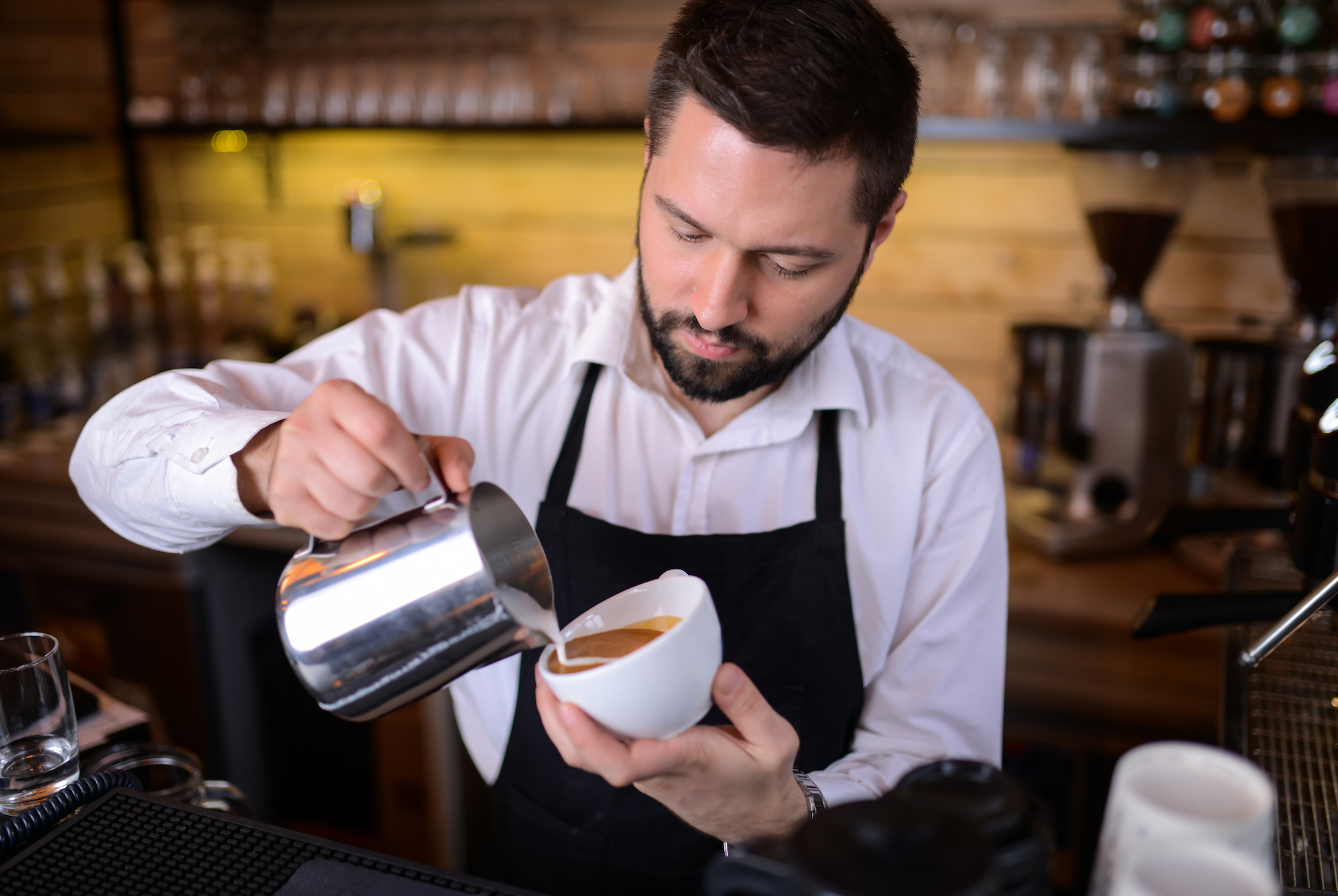
The word barista comes from Italian, where it originally referred to a bartender, someone working behind a bar. In contemporary hospitality, the term has a more precise meaning. A barista is a trained coffee professional who specialises in preparing espresso-based and brewed coffee to a consistent standard.
Within the specialty coffee sector, which continues to grow globally, baristas are regarded as skilled practitioners. Their work is evaluated on precision, consistency, and sensory awareness. Similar to how a sommelier is expected to understand wine structure and origin, a barista is expected to understand coffee at a deeper level and apply that knowledge with control and accuracy in every cup.
Types of baristas
The role of a barista changes depending on the environment. Pace, responsibility, and expectations are not the same in every setting, and the level of technical depth required can vary significantly.
In independent specialty cafés, baristas are expected to understand coffee at a detailed level. Knowledge of origin, roast development, extraction theory, and brewing techniques is central to the role. Guests often ask questions, and consistency must exist alongside creativity. Adjustments are made throughout the day to maintain flavour accuracy.
In high-volume chain environments, the focus shifts toward speed and standardisation. Baristas follow established recipes and workflows designed to deliver uniform results efficiently. Precision still matters, but it operates within structured systems where consistency under pressure is essential.


In fine-dining restaurants and luxury hotels, coffee service forms part of a broader food and beverage programme. Here, technical skill must be paired with refined guest interaction. Presentation, timing, and communication carry as much weight as extraction quality. The barista works closely with the wider hospitality team to maintain service standards that reflect the overall brand positioning.
Within these environments, specific areas of specialisation also exist. Some baristas concentrate on espresso extraction and calibration. Others focus on latte art and milk texturing. Manual brew specialists work with methods such as pour-over, Chemex, or AeroPress, requiring careful control of time and temperature. Coffee roasters operate at an earlier stage of the process, developing flavour profiles before beans ever reach the machine. At senior levels, baristas may also oversee inventory management, contribute to menu development, and train junior staff, expanding their role beyond preparation alone.
What Does a Barista Do?
The technical side of the role begins before service starts. Each shift requires calibration, adjusting grind size, dose weight, and extraction time to ensure the coffee tastes balanced under current conditions.
A barista's responsibilities typically include:
- Dialling in espresso by adjusting grind, dose, and extraction to achieve consistent flavour.
- Pulling espresso shots and preparing milk-based drinks such as lattes and cappuccinos to set specifications.
- Steaming and texturing milk correctly for both taste and presentation.
- Preparing filter coffee and manual brews using methods such as pour-over or Chemex.
- Cleaning and maintaining equipment, including grinders and espresso machines, to protect quality and performance.
- Managing point-of-sale transactions accurately during both quiet and high-volume periods.
- Explaining menu options clearly and guiding guests based on flavour preference or dietary needs.
- Monitoring stock levels and reporting inventory requirements when needed.
- Training junior staff in workflow, quality control, and service standards at more senior levels.
How to Become a Barista


Start Your Journey in the World of Hospitality
Turn your passion into a rewarding international career
You can enter the barista profession without a formal qualification. Many professionals begin in entry-level café roles and learn through on-the-job training. However, those who aim to work in premium venues, take on supervisory responsibility, or build a long-term career in beverage service often find that structured education provides a clearer pathway forward.
Progression in this field tends to follow a recognisable structure:
- Entry level
Working in a café environment while learning machine operation, recipe execution, hygiene standards, and basic guest service under supervision.
- Intermediate
Developing sensory awareness, identifying flavour imbalances, refining milk technique and latte art, and taking on shift coordination or quality control responsibilities.
- Advanced professional
Competing in barista competitions, specialising in a brewing method, moving into training roles, consultancy, roasting, or broader beverage management within hospitality operations.
Formal hospitality education accelerates this progression by providing context.
Programs at Swiss Hotel Management School integrate food and beverage management, service design, operational leadership, and business fundamentals. Students, therefore, learn not only how to prepare coffee to a high standard, but how that technical skill connects to revenue management, workflow design, supplier relationships, and long-term brand positioning.
Hospitality careers are rarely linear. Christian Schroder, an SHMS alumnus, offers a practical example of how foundational hospitality training can extend far beyond a single role. Before entering the industry, he explored photography, then built his career in London's bar scene, quickly progressing to head bartender within ten months. Reflecting on that period, he explained:
I had finally found an industry which I was passionate about and that I loved, so putting all of those factors together meant I had no choice in my mind but to study hospitality.
After completing his BA in Hospitality and Events Management at SHMS, Christian transitioned into the shipping industry, applying the networking, research, and interpersonal skills developed during his studies. His career path demonstrates that hospitality education is not confined to hotels or restaurants. The operational discipline and service mindset developed through structured training can translate into leadership opportunities across industries.
Essential Skills for Success
What separates a competent barista from an exceptional one is the combination of technical precision and interpersonal awareness. Mastery develops through structured training, repetition, and the ability to apply knowledge consistently during service.
Technical skills


Professional credibility begins with technical capability. Some of the most important technical skills for baristas to have include:
- Calibrating espresso by adjusting grind size, dose, yield, and extraction time to achieve balance and clarity.
- Steaming and texturing milk to the correct temperature and microfoam consistency for different beverage styles.
- Executing consistent latte art patterns such as rosettas, tulips, and hearts with control and precision.
- Developing seasonal or signature recipes that align with bean origin, roast profile, and guest expectations.
- Understanding how growing region, altitude, processing method, and roast level influence flavour for accurate menu guidance.
Soft skills
Technical ability alone does not define professional excellence. Behavioral competence and service awareness are equally important.
- Communicating drink options clearly and managing guest expectations with confidence and professionalism.
- Multitasking efficiently during peak service while maintaining quality and workflow stability.
- Maintaining attention to detail to ensure consistency in flavour, temperature, and presentation.
- Identifying flavour profiles accurately and recognising extraction defects through trained sensory awareness.
Career Growth and Opportunities
A barista's role is often the entry point into the food and beverage industry, but it does not restrict long-term progression. With experience, technical depth, and operational awareness, professionals can move into leadership roles or expand into adjacent areas within hospitality.


Vertical progression
Vertical progression involves moving into positions with greater responsibility, oversight, and strategic influence within an organisation.
- Leading quality control, standardising recipes, training team members, and refining menu offerings as a Head Barista.
- Overseeing daily operations, managing staffing and scheduling, maintaining supplier relationships, and monitoring financial performance as a Café or Coffee Shop Manager.
- Directing the entire beverage programme within hotels or restaurant groups, including budgeting, procurement, and brand alignment as a Beverage Director.
Lateral opportunities
Lateral opportunities allow professionals to deepen expertise in specialised areas of the coffee and hospitality ecosystem without immediately transitioning into general management.
- Selecting beans, developing roast profiles, and maintaining flavour consistency through roasting and quality control work.
- Designing structured training programmes for café groups, hotel brands, or independent operators in barista training and consultancy roles.
- Launching an independent specialty café or coffee concept requires business planning, cost management, and strategic positioning alongside craft expertise.
Elevate the Art of the Pour
Making good coffee is a skill. Understanding how that skill fits into a revenue model, a staffing structure, and a larger food and beverage strategy is professional development. The hospitality industry rewards that broader awareness. For individuals willing to refine both craft and operational thinking, the barista role can become a foundation for leadership, specialisation, or entrepreneurship rather than a fixed position behind a counter.
Experience remains central, but structured education and international exposure often provide clarity and direction. Join our programs at Swiss Hotel Management School, like the Bachelor of Arts in International Hospitality Management, and turn practical skills into long-term career progression.
Frequently Asked Questions
What qualifications do you need to be a barista?
No formal qualification is required to work as an entry-level barista, but professional training, through a hospitality programme, a certified barista course, or café experience, significantly improves employment prospects and earning potential, particularly in specialty or luxury settings.
Is it hard to become a barista?
The basics can be learned quickly, but reaching a professional standard takes consistent practice and a structured approach to learning extraction science, sensory evaluation, and service. Most skilled baristas develop their technique over months of deliberate, supervised work.
What are the benefits of working as a barista?
Barista work builds transferable skills like precision, multitasking, communication, and guest management that are valued across the hospitality sector. It also offers a clear progression path into management, training, and entrepreneurship for those who invest in their professional development.
Take the leap — discover your future in hospitality with Swiss Hotel Management School.