

- About
- Programs
- View all programs
- Swiss Professional Degree (ES)


- Bachelor of Arts in International Hospitality Management

- Master of Arts in International Hospitality Business Management
- Master of Arts in International Hospitality Business Management: Luxury Brand Management

- Master of Science in International Hospitality Management

- Master of Arts in Executive Hospitality Management (online)

- Master of Business Administration - MBA Global

- Postgraduate Diploma to Master of Advanced Studies in Business

- Postgraduate Diploma in International Hotel, Resort, and Spa Management
- Campus life
- Career Services
- Admissions
- News & Events
- Alumni













Top 7 Wellness Industry Trends Shaping the Sector in 2026
Explore 7 wellness industry trends shaping 2026, from longevity and wellness tourism to AI personalization and the careers that will define the sector.


Key Takeaways
- Wellness is now a $6.8 trillion global economy, with some of the strongest growth coming from wellness real estate, tourism, and other consumer-led sectors.
- The biggest wellness trends in 2026 include longevity, mental wellness, smarter personalization, social experiences, and wellness-focused places to live and travel.
- Career opportunities are expanding beyond practitioner roles into wellness operations, tourism, real estate, strategy, and guest experience.
- Building a career in wellness increasingly means combining business and hospitality skills with focused sector knowledge and practical experience.
Wellness has grown into a major global industry, and the next phase of that growth is changing where the strongest opportunities are emerging. The global health and wellness market is projected to reach around $7.76 trillion by 2035, with areas such as longevity, mental wellness, wellness tourism, and workplace wellness attracting increasing attention.
For students and professionals considering a career in the sector, these shifts are important because they influence the services businesses are investing in and the skills they need from their teams. Looking at the wellness industry trends shaping 2026 offers a better view of where the market is heading and where new career opportunities may follow.
The State of the Wellness Industry in 2026
In 2026, wellness is a global consumer economy that reaches beyond fitness, spas, or personal care. The latest complete benchmark from the Global Wellness Institute values the wellness economy at $6.8 trillion, with all 11 sectors now above their pre-pandemic levels. This means wellness is increasingly embedded in how people spend on travel, housing, food, beauty, mental health, and everyday lifestyle choices.
Growth is particularly strong in certain parts of the market: GWI's 2026 country-level analysis identifies wellness real estate, wellness tourism, personal care and beauty, and healthy eating, nutrition, and weight loss as major drivers of growth across the world's largest and fastest-growing wellness markets.
The industry is also becoming more geographically significant. The U.S. alone represents a $2.1 trillion wellness economy, followed by China at $950 billion, while countries including the UAE, Saudi Arabia, and India recorded some of the strongest five-year growth rates. For people considering a career in wellness, that creates opportunities across a much wider range of businesses and markets than the traditional practitioner roles often associated with the sector.
7 Wellness Industry Trends to Watch in 2026


The most important wellness trends in 2026 are taking the sector in several directions at once. Longevity is expanding into new settings, while technology is making some services more personal, and social wellness is bringing greater attention to shared experiences. For people building careers in the sector, it's important to be well-informed about the trends to watch this year.
1. Longevity and healthspan move into new areas
Longevity has developed beyond the idea of simply living longer. The focus is increasingly on healthspan, or extending the years people spend in good health, and 2026 is bringing more specialized approaches to how those services are delivered.
The Global Wellness Summit's 2026 trends research identifies two particularly important developments. Women's longevity is moving toward health programs designed around female biology across different life stages, while longevity residences are bringing preventive care, advanced diagnostics, and health tracking into residential settings.
For hospitality and wellness businesses, this creates a management challenge as well as a health opportunity. Longevity programs need credible expertise and a service model that guests or residents can realistically use over time. SHMS addresses this directly through its Wellness & Longevity Business Management major, which includes longevity and healthspan program design.
2. Wellness tourism keeps expanding
Wellness travel continues to grow as people spend on trips that support their physical or mental wellbeing. The latest Global Wellness Institute data puts global wellness tourism expenditure at approximately $894 billion in 2024 and projects annual growth of 9.1% through 2029.

The category extends across retreats, thermal experiences, spa stays, and medical-wellness programs, giving hotels and resorts more ways to build wellness into the guest experience. This also broadens the role of the people running those properties, who need to understand how wellness services fit with the wider hospitality operation.
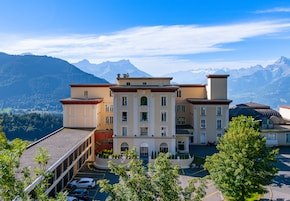
Switzerland offers a particularly relevant setting for studying this market. The SHMS Leysin campus is located in the Swiss Alps and includes a professional spa, while the school's coverage of wellness tourism and spa tourism explores how these experiences are becoming part of modern hospitality.
3. Mental wellness moves toward neurowellness and recovery
Mental wellness remains one of the fastest-growing parts of the wellness economy. The Global Wellness Institute found that the sector expanded by an average of 12.4% a year between 2019 and 2024, second only to wellness real estate.
In 2026, that growth is taking a more specific direction. The Global Wellness Summit identifies the rise of neurowellness, with greater attention to sleep quality, nervous-system regulation, and technologies designed to support recovery. Sleep is becoming an important entry point because improvements can be tracked through wearables and other monitoring tools.
For hospitality businesses, this creates room for wellness programs built around rest and recovery while raising the standard for how those services are designed. Managers need to understand the guest experience while knowing where specialist or clinical expertise is required.
4. Personalization becomes smarter and less intrusive
Wearables, diagnostics, and AI continue to make wellness more personal. Health data can already inform areas such as sleep, fitness, and healthy-aging programs, while AI can help turn large amounts of information into recommendations that are easier for consumers to use.
At the same time, 2026 is bringing a reaction against constant tracking. The Global Wellness Summit's 2026 research identifies an "over-optimization backlash," as some consumers grow tired of monitoring every score and biomarker.
That changes what good personalization looks like. The strongest applications help people act on useful information without making the technology itself the center of the experience. For wellness managers, this means combining technology fluency with sound judgment about privacy, service, and the needs of the individual.
5. Wellness becomes more social


One of the clearest 2026 developments is a move toward wellness experiences built around community and enjoyment. The Global Wellness Summit calls this the "festivalization of wellness," covering experiences such as sober dance events, wellness festivals, sauna gatherings, and multi-day programs at resorts.
The common idea is that wellness increasingly happens with other people. Music, movement, and shared activities give businesses new ways to create experiences that feel very different from an individual spa treatment or fitness session.
This is especially relevant to hospitality because these experiences need to be programmed and operated like events. Professionals with experience in guest engagement and event management can apply those skills to a growing area of wellness built around participation and community.
6. Wellness real estate grows rapidly
Wellness is increasingly influencing the places where people live as well as the services they buy. Global Wellness Institute data released in May 2026 puts the wellness real estate market at $876 billion in 2025, following average annual growth of around 23.5% since 2019. GWI expects the market to reach $1.8 trillion by 2030.
These developments can incorporate features ranging from wellness facilities to health-focused design and preventive-care services. Longevity residences are pushing the concept further by connecting residential living with ongoing diagnostics and personalized health support.
Managing these properties requires an understanding of both the wellness offer and the business around it. At SHMS, students gain exposure to that intersection through hospitality management training and the professional spa at the Leysin campus, which is open to the public and staffed by working wellness professionals.
7. Wellness businesses need more specialized management
As the wellness economy expands into areas such as longevity, tourism, and real estate, running these businesses requires knowledge that goes beyond delivering a treatment or wellness service. Operators also have to manage people, finances, guest expectations, and increasingly complex business models.
The Global Wellness Institute's 2026 Consulting Best Practices Initiative reports growing demand for expert guidance from wellness startups, noting that many founders enter the market without previous hospitality, wellness, or retail experience. That gap makes business and operational knowledge increasingly important as new concepts move from an idea to a functioning wellness business.
The Postgraduate Diploma to Master of Advanced Studies in Business at SHMS addresses this through its Wellness & Longevity Business Management major. Students study spa and medical-wellness operations alongside longevity and healthspan program design, while the wider curriculum covers leadership, financial decision-making, and business strategy.
What These Trends Mean for Wellness Careers


The trends above are broadening the kinds of careers connected to wellness. As the sector expands across hospitality, longevity, real estate, and guest experience, opportunities increasingly extend to people who can manage the business and operational side of wellness.
Relevant career paths include:
- Spa and wellness operations management
- Wellness tourism and retreat management
- Longevity and preventive wellness program management
- Wellness real estate and property development
Wellness strategy and guest experience
How to Prepare for a Career in the Wellness Industry
Preparation depends on the part of wellness you want to enter. If you are interested in a management-focused career, it generally requires a combination of business knowledge, sector expertise, and practical experience. So, to prepare for this career, you must:
- Build a strong business and hospitality foundation: Learn how to manage operations, budgets, teams, and guest experience. These skills become especially important when moving from delivering a wellness service to running the business behind it.
- Choose your specialization deliberately: Use current market research to identify where your interests align with real industry growth.
- Choose a program that matches the work you want to do: The Postgraduate Diploma to Master of Advanced Studies in Business offers a Wellness & Longevity Business Management major covering Spa and Medical Wellness Operations and Longevity and Healthspan Program Design.
- Keep following credible industry research: The Global Wellness Institute is one of the strongest sources for global wellness market data, while the Global Wellness Summit is useful for emerging trend research. Keeping up with both helps you distinguish sustained market growth from shorter-lived wellness trends.
Turn Wellness Industry Trends Into a Career Advantage
The wellness industry is growing in new directions, creating opportunities for professionals who understand both the sector and the business behind it. Following the trends is useful, but building the skills to respond to them is what turns that knowledge into a career advantage.
At Swiss Hotel Management School, the Wellness & Longevity Business Management major, offered through the Postgraduate Diploma to Master of Advanced Studies in Business, provides an excellent way to prepare for that next step within a broader business and hospitality education.
Join us at SHMS and start building the knowledge and experience to grow with the wellness industry.
Frequently Asked Questions
What certifications or qualifications do wellness industry employers look for?
Qualifications depend on the role. Management positions commonly draw on backgrounds in hospitality, business, or wellness, while clinical and treatment-based roles may require separate professional licenses or certifications.
Which wellness trends are backed by evidence, and which are more marketing than science?
Market data strongly supports the growth of areas such as wellness real estate, mental wellness, and wellness tourism. The Global Wellness Institute tracks their size and growth, but market popularity does not prove that every treatment or health claim within those sectors is scientifically effective. Individual products, diagnostics, and therapies should be assessed on their own clinical evidence.
Can you switch to a wellness career from hospitality, business, or another industry?
Yes. Many management-focused wellness roles use transferable skills in operations, finance, leadership, and guest experience. SHMS's postgraduate hospitality program is suitable for professionals moving into hospitality from another discipline as well, with the Wellness & Longevity Business Management major providing specialist study in areas such as spa and medical wellness operations and longevity program design.
What kinds of employers hire wellness industry managers?
Wellness managers work across hotels and resorts, destination spas, wellness centers, medical spas, residential developments, and dedicated wellness businesses.